
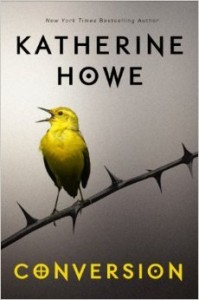
 Published by Putnam Juvenile
Released July 1, 2014
432 pages
Where I got it: E-galley received from publisher via NetGalley
Rating: 

Description (from Goodreads):
It’s senior year at St. Joan’s Academy, and school is a pressure cooker. College applications, the battle for valedictorian, deciphering boys’ texts: Through it all, Colleen Rowley and her friends are expected to keep it together. Until they can’t.
First it’s the school’s queen bee, Clara Rutherford, who suddenly falls into uncontrollable tics in the middle of class. Her mystery illness quickly spreads to her closest clique of friends, then more students and symptoms follow: seizures, hair loss, violent coughing fits. St. Joan’s buzzes with rumor; rumor blossoms into full-blown panic.
Soon the media descends on Danvers, Massachusetts, as everyone scrambles to find something, or someone, to blame. Pollution? Stress? Or are the girls faking? Only Colleen—who’s been reading The Crucible for extra credit—comes to realize what nobody else has: Danvers was once Salem Village, where another group of girls suffered from a similarly bizarre epidemic three centuries ago . . .
Inspired by true events—from seventeenth-century colonial life to the halls of a modern-day high school—Conversion casts a spell. With her signature wit and passion, New York Times bestselling author Katherine Howe delivers an exciting and suspenseful novel, a chilling mystery that raises the question, what’s really happening to the girls at St. Joan’s?
I love the history of the Salem Witch Trials. A native Southern Californian, when I had an internship in New England, the only weekend trip I took was to Salem. I’ve been there multiple times since I moved to Massachusetts, and find the history fascinating. When I saw that Katherine Howe was writing a new young adult novel that had some basis in the Salem hysteria, I knew it was a must read. Sadly, it didn’t live up to my expectations.
Howe tries something interesting in Conversion. She links the current phenomena of mystery illness among high school students to the hysteria in Salem in the 1690s. The current school in Danvers, MA is a hotbed of stresses: girls worrying about grades, competing with each other for class rank, hoping to get into their ideal colleges, and, of course, boys. Then, the coolest girl in school starts to twitch uncontrollably in class.
This book had so much promise. It just didn’t work for me for the reason that some other young adult books by adult novelists don’t work. Howe doesn’t write in a convincing teen voice. Her first-person narrator comes across as inauthentic and stilted. On top of that, it takes her much too long to draw certain connections that are obvious to readers from the outset. There was much face-palming while I read this book.
While young adult fiction must seem like a goldmine, not all authors should attempt it. It isn’t as easy as it seems to write a good young adult novel, and Howe just doesn’t pull it off. It’s too bad. Conversion is a good idea, poorly executed.
Add it on Goodreads









 Subscribe to Bibliosaurus Text